Korean Public Transport Etiquette Foreigners Often Miss

Start here: Korea Travel Reality Guide for Foreigners

Foreigners often say Korea’s public transport is clean and efficient, but many also feel small social pressure without understanding why.

This happens because much of the etiquette is unspoken. Locals follow it automatically, and foreigners may break it without realizing.

What foreigners expect

Many visitors expect public transport rules to be clearly announced and enforced the same way as in their home country.

They assume that if something is not strictly forbidden, it is socially acceptable.

What Koreans actually notice

In Korea, public transport etiquette is strongly shaped by “shared comfort.” People try to reduce noise, blocking, and friction in crowded space.

  • Silence is the default. Trains and buses are often quieter than foreigners expect.
  • Flow matters. Small blocking behaviors are noticed quickly in crowded stations and doors.
  • Personal space is managed indirectly. People rarely confront others, but discomfort is real.

Common misunderstandings

  • Talking loudly is normal everywhere. In Korea, loud conversations can feel disruptive, especially on trains.
  • Standing anywhere is fine. Blocking doors or escalator flow creates silent frustration.
  • Eating and drinking is always acceptable. Some items and smells draw attention in enclosed spaces.
  • Priority seating is “only for elderly.” Locals often treat it as reserved even if empty.

Why it’s like this in Korea

Korean cities are dense and commuting is a daily routine for many people. When crowds are normal, small behaviors have bigger impact.

  • High commuter volume. Efficiency depends on people moving smoothly and quickly.
  • Low confrontation culture. People prefer indirect pressure over direct conflict.
  • Shared-space mindset. Comfort is treated as a collective responsibility, not an individual right.

What to do differently

  • Lower your volume. If you speak, keep it quiet and short.
  • Do not block doors. Step off briefly if needed, then re-enter.
  • Stand to one side on escalators. Let others pass if they are rushing.
  • Respect priority seating. Treat it as reserved even if no one is there.
  • Keep bags compact. In rush hours, large backpacks create friction.

Conclusion

Korean public transport etiquette is mostly about reducing friction in crowded spaces. Once you understand the local default—quiet, flow, shared comfort—your experience becomes smoother.

You do not need perfection. You just need the local logic.

Subtle Social Mistakes Foreigners Make inSouthKorea

Korean Culture Travel Tips Social Etiquette

Subtle Social Mistakes Foreigners Make in South Korea

"In Korea, many social rules that seem subtle or strange to foreigners are deeply rooted in respect for hierarchy and group harmony, not personal feelings."

What foreigners expect

Many visitors arrive expecting communication to be universally direct, where "yes" means agreement and honesty is expressed bluntly. They might anticipate that friendly, smiling customer service is the standard for a positive interaction, similar to what is common in some Western countries. There is often an expectation of a certain amount of personal space, even in crowded urban environments. Furthermore, visitors may assume that inquiries about age or marital status from new acquaintances are overly invasive and personal.

What Koreans actually notice

Koreans are quick to observe social cues that indicate a foreigner's level of cultural awareness. Small gestures and behaviors carry significant weight.

• 01Language FormalityUsing informal language with strangers or elders is immediately jarring.

• 02One-Handed ExchangesGiving/receiving items with one hand can be perceived as dismissive.

• 03Intense Eye ContactProlonged eye contact can feel confrontational rather than confident.

Common Misunderstandings

λ„€

The Meaning of "Ne"

Often translated as "yes," it frequently means "I am listening." It does not necessarily signify agreement. ⚡

Service efficiency

A silent worker isn't rude. The priority is swift service, not overt friendliness for strangers.

πŸŽ‚

Personal Questions

Asking age is practical. It establishes the social hierarchy for the correct level of formality.

Why it’s like this in Korea

The entire social operating system is built upon principles that prioritize the collective over the individual. Confucian hierarchy provides stability, with age and status dictating roles. The concept of nunchi (눈치) , or the ability to "read the room," makes indirect communication highly valued.

"We" Culture

Group harmony is paramount, and an individual's actions reflect on their entire group.

Practical Cohesion

In a densely populated country, behaviors like public quiet are essential adaptations for living together.

What to do differently

Dining Etiquette

Always wait for the eldest person at the table to pick up their spoon or chopsticks before you begin eating.

Softer Communication

Avoid direct "no". Try indirect phrasing like, "Let me think about that," or "Perhaps we could consider another option."

Mindful Volume

Keep your voice low in enclosed public spaces like subways and cafes. Take phone calls in private areas.

Attempt Formal Language

Using the formal "-yo" (μš”) or "-nida" (λ‹ˆλ‹€) endings shows significant respect, even if grammar isn't perfect. FINISHING THOUGHTS

Navigate with Understanding

Successfully navigating social situations in Korea is less about memorizing a long list of rules and more about understanding the underlying principles. Making a conscious effort to observe and adapt shows a genuine interest in the culture that leads to more meaningful interactions. Return to Top

Magoksa Temple Stay: A Gongju Hidden Gem Escape

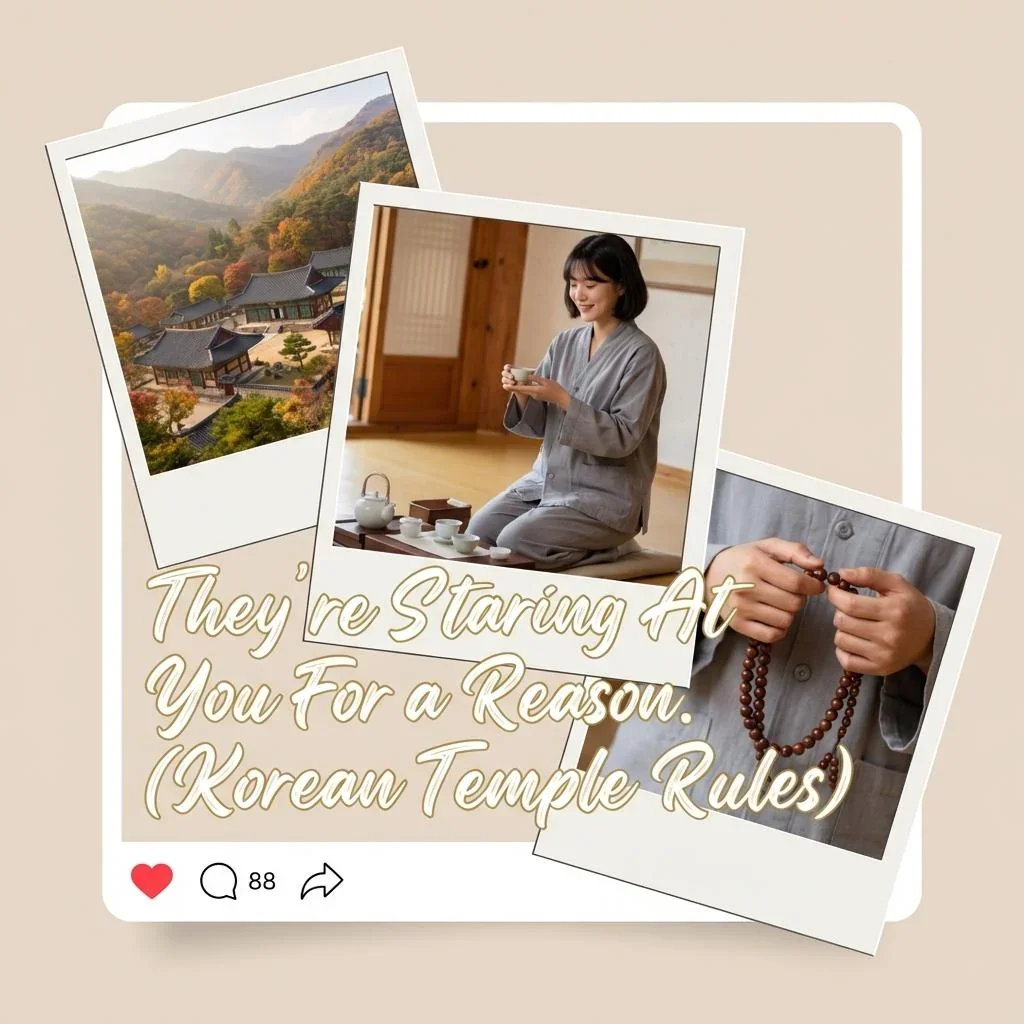
Tired of Seoul? Discover the Magoksa Temple Stay, a UNESCO gem. Learn the hidden rules of Korean temple etiquette for foreigners and find true peace. They're Staring At You For a Reason. (Korean Temple Rules)

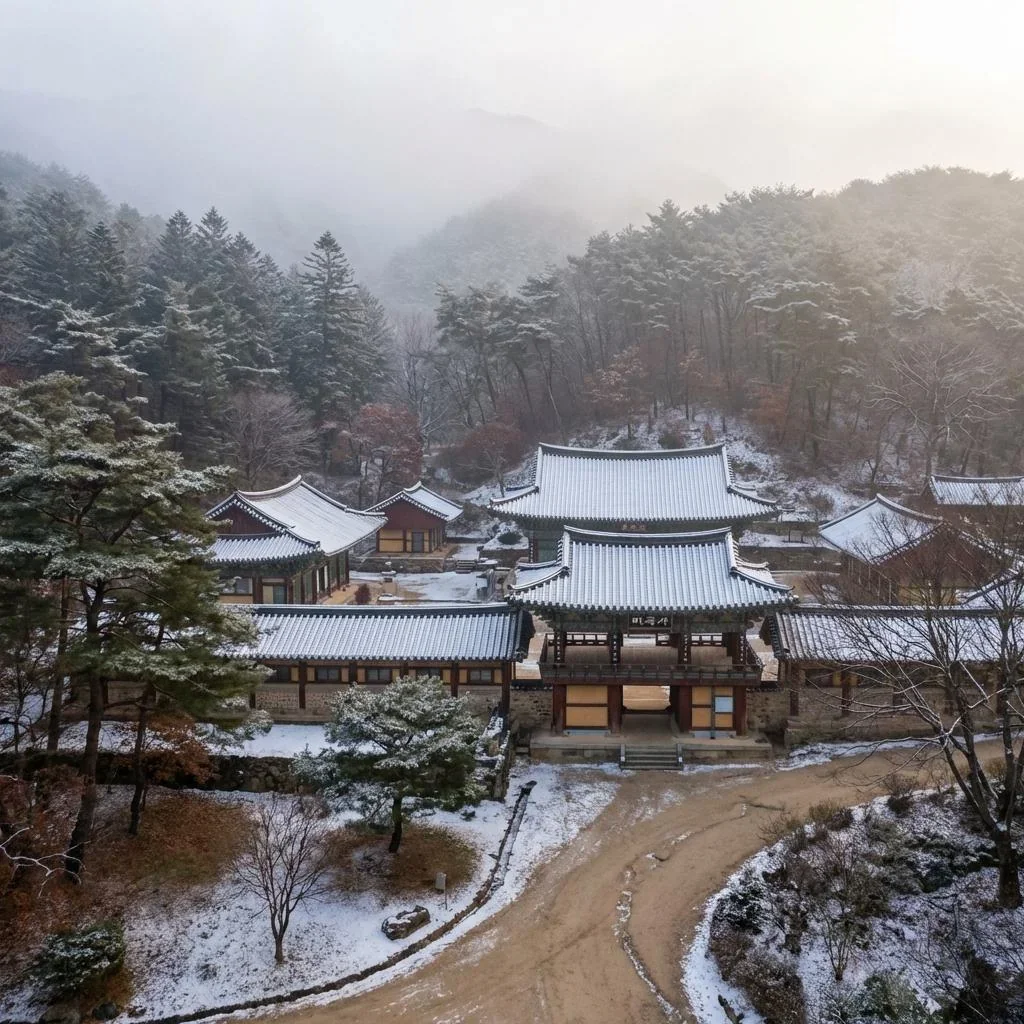
Magoksa Temple Entrance

Before you trade Seoul’s chaos for serene mountain life, understand that a temple stay isn't a hotel—it’s an authentic Korean cultural experience. This means structure, rules, and a chance to disconnect. With winter heating costs soaring in cities, this minimalist escape offers a different kind of warmth.

Feature Description Why It Matters
Digital Detox Wi-Fi is weak or non-existent; schedules are strict. You are forced to be present, not scrolling. This is the core benefit.
Mandatory Rituals You must attend pre-dawn chanting (Yebul) and formal meals. This isn't optional sightseeing; you are participating in monastic life.
Basic Living Shared rooms with thin floor mats (yo); simple vegetarian meals. Comfort is not the goal. Humility and mindfulness are.

Pros and Cons Comparison

Pros Cons
Unbeatable peace and quiet. Strict, early wake-up calls (around 3-4 AM).
Deep cultural immersion. Uncomfortable sleeping arrangements for some.
Beautiful natural scenery. Can be isolating if you don't speak any Korean.
Surprisingly affordable. Mandatory participation in all activities.

1. What to Know Before Booking a Magoksa Temple Stay

Before you trade Seoul’s chaos for serene mountain life, understand that a temple stay isn't a hotel—it’s an authentic Korean cultural experience. This means structure, rules, and a chance to disconnect. With winter heating costs soaring in cities, this minimalist escape offers a different kind of warmth.

Serene shot of Magoksa Temple in the mountains

2. Why is Magoksa the perfect Gongju hidden gem for foreigners?

Most tourists who venture outside Seoul go to Gyeongju, the Silla Kingdom's capital. But Gongju was the capital of the Baekje Kingdom, an equally powerful but often overlooked dynasty. Magoksa is one of the seven "Sansa," UNESCO Mountain Temples in Korea, famous for its layout that harmonizes perfectly with the Taegeuk symbol (the center of the Korean flag). It's an evergreen destination, stunning in every season, but especially serene under winter snow.

3. Step 1: Booking Your Authentic Korean Cultural Experience

Don't just show up. You must book in advance, especially if you need English guidance.

4. Step 2: Getting to Gongju from Seoul

The journey is part of the adventure and a great way to see the Korean countryside.

• Insider's Secret:For the budget-conscious, take local bus #774 from outside the station. It's slower, but you'll save a significant amount. Use Naver Map, not Google Maps, for the accurate bus schedule. The bus stop name is "λ§ˆκ³‘μ‚¬" (Magoksa).

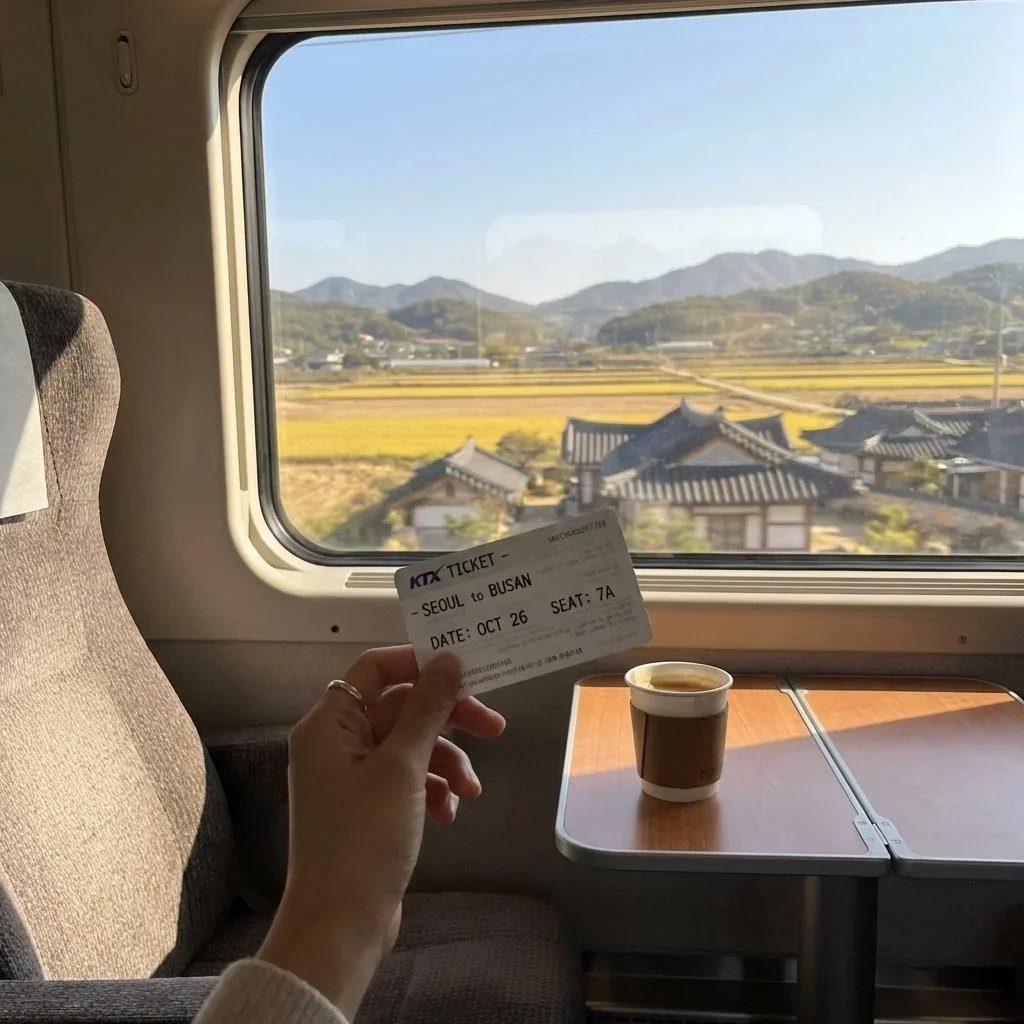
KTX ticket and Korean rural landscape

5. Step 3: Arrival and the First "Hidden Rule"

Upon arrival, you will check in and be shown to your room. This is where the cultural disconnect often begins. Your room will be simple, with floor mats, blankets, and a pillow. There is no bed, no TV, and no mini-fridge. The "hidden rule" here is about accepting simplicity. The purpose is to remove distractions, not add comforts.

6. Decoding Korean Temple Etiquette for Foreigners: Why You're Getting Glares

This is the core of the experience. It's not just about being quiet; it's about understanding the "why."

• Common Mistake:Walking through the large, central door of a temple hall.

• The Hidden Rule:This door is for senior monks only. Laypeople must always use the side doors. This is a physical manifestation of humility.

• Common Mistake:Walking directly down the center of the prayer hall in front of the Buddha statue.

• The Hidden Rule:This central path is considered the Buddha's spiritual energy path. You should walk along the sides of the hall. Breaking this rule is like photobombing a sacred ritual.

• Common Mistake:Pointing your feet towards the Buddha statue when sitting.

• The Hidden Rule:The feet are considered the lowliest, dirtiest part of the body. Always sit cross-legged or kneel, ensuring your feet are pointed away from the altar.

7. The Controversial Insight: Is a Temple Stay "Authentic" Anymore?

Some purists argue that Temple Stay programs, especially those for foreigners, are a commercialized version of Buddhism. They say the structured activities and English guides dilute the raw, solitary practice of a monk. However, the common wisdom for travelers is that without this structured entry point, the profound philosophy and daily life within these UNESCO mountain temples in Korea would remain completely inaccessible. It's a necessary bridge between two vastly different worlds.

8. What to do in Gongju After Your Temple Stay

Don't just head back to Seoul. Gongju is rich with Baekje Kingdom history.

• Gongsanseong Fortress:A UNESCO World Heritage site with a stunning wall walk along the Geumgang River.

• Royal Tombs of King Muryeong:Discover priceless gold artifacts recovered from an unlooted royal tomb.

• Hanok Village:A more peaceful and less crowded alternative to the famous hanok villages in Seoul or Jeonju.

9. Insider's Hack: The Best Post-Temple Meal in Gongju

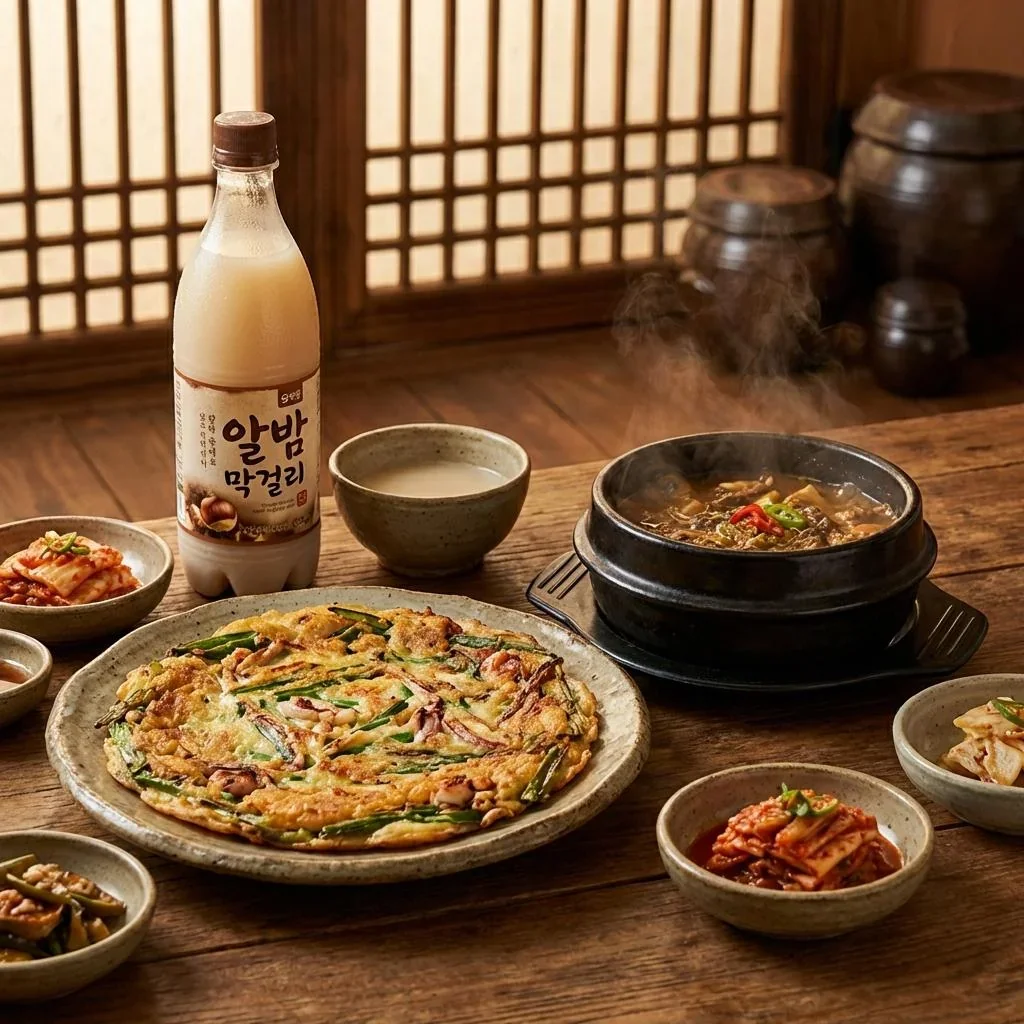
After days of simple vegetarian food, you'll want something hearty. The local specialty is food made with chestnuts (bam), as Gongju is the chestnut capital of Korea. Find a local restaurant near Gongsanseong Fortress and order Al-bam Makgeolli (chestnut rice wine) and pajeon (savory pancake). The sweet, nutty flavor of the makgeolli is something you can't find in Seoul. Try a product like "Cheoligui" brand makgeolli if you see it in stores.

Bubbling Korean stew and chestnut makgeolli

10. Understanding "Jeong": The Real Souvenir

The most common feeling foreigners report after a temple stay is a strange connection to the place and the people, even with the language barrier. This is Jeong (μ •), a uniquely Korean concept of deep, unspoken connection and affection. It's built through shared experiences, like eating together or enduring the pre-dawn cold for chanting. It's the reason a monk might quietly hand you an extra orange. This feeling is the authentic souvenir you take home.

11. Final Checklist for Your Trip

Book Temple Stay online in advance. Download Naver Map and Papago translator. Pack modest, comfortable clothing and good walking shoes. Bring cash (KRW) for local buses and small purchases. Open your mind to silence, simplicity, and a different way of being.

12. Official Information and Booking

Address:

966 Magoksa-ro, Sagok-myeon, Gongju-si, Chungcheongnam-do, South Korea Official Temple Stay Booking Website: https://eng.templestay.com/

Q1: Do I need to be a Buddhist to do a temple stay?

A: Absolutely not. The program is open to everyone of any or no faith. It is presented as a cultural experience focused on mindfulness and tradition, not religious conversion.

Q2: Is it difficult if I don't speak any Korean?

A: Magoksa is one of the temples that often has English-speaking program managers. While knowing basic phrases like "Gamsahamnida" (Thank you) is appreciated, you can navigate the program with English guidance.

Q3: What is the food like?

A: It's called baru gongyang, a formal monastic meal that is entirely vegetarian (vegan, in fact). The food is simple, healthy, and part of the mindful practice. The hidden rule is you must eat every single grain of rice in your bowl to show respect for the food.

Leave the noise behind. A trip to Magoksa isn't just about escaping Seoul for a day; it's about finding a quiet corner of yourself you forgot existed.

Common Mistakes Foreigners Make Recharging T-money in Korea

Start here: Korea Travel Reality Guide for Foreigners

Foreigners often assume topping up a transport card is the same everywhere: tap, choose an amount, pay with any card, and done.

In Korea, the process is simple once you know the local defaults, but first-timers often make small mistakes that waste time or cause stress in a busy station.

What foreigners expect

Many visitors expect the machine to support English clearly, accept international cards, and behave like a standard ticket kiosk.

They also expect “recharge” to work the same way on buses, at any station, and in any payment method.

What Koreans actually notice

Locals treat T-money as a daily routine and follow a few simple habits without thinking.

  • They recharge in the most predictable places. Subway stations and convenience stores are the default.
  • They keep the process fast. In crowded stations, people move quickly and do not wait for long decisions.
  • They trust cash as the universal backup. If anything feels uncertain, cash recharge solves it immediately.

Common misunderstandings

  • “Any machine will recharge my card.” Some kiosks are for tickets or other services. Look for the transport card top-up option.
  • “My international card will always work.” Payment support can vary. If your card fails, it is usually faster to use cash or recharge at a convenience store.
  • “I can top up on the bus like other countries.” In Korea, top-up is most reliably done before you ride: station or convenience store.
  • “I don’t need to check the balance.” If you are transferring or entering a long trip, low balance becomes an unnecessary problem.

Why it’s like this in Korea

Korea’s transport system is designed for speed and volume. Stations can be crowded, and the card system is built around predictable routines rather than long interactions.

  • High-traffic stations. Machines are optimized for quick use, not extended guidance.
  • Local payment defaults. Cash and local methods are the safest fallback when something is unclear.
  • Convenience store infrastructure. Korea treats convenience stores as daily service hubs, not just shops.

What to do differently

If you follow these habits, T-money recharging becomes a non-issue.

  • Recharge before you enter the busiest area. If possible, top up at a quieter station entrance or early in your trip.
  • Use cash as your universal fallback. If the machine payment feels confusing, cash top-up is usually the fastest solution.
  • Use convenience stores when stations feel stressful. Ask for “T-money top up” and show your card. This is often easier than kiosks for first-timers.
  • Top up in simple amounts. Keep it easy: choose a round number you can remember, then check the balance after.
  • Check balance before transfers. A low balance during a transfer is one of the most common avoidable mistakes.

Conclusion

Recharging T-money in Korea is not complicated, but it follows local routines: fast, predictable, and often cash-friendly. Once you learn the default flow, you stop thinking about it.

If Korea feels confusing, it is usually because you are using a “global assumption.” Switching to local defaults—station or convenience store, simple top-ups, quick checks—removes the stress.

Korean Address System Explained for Foreigners in Korea

Start here: Korea Travel Reality Guide for Foreigners

Foreigners often expect an address to work like a universal “pin.” You type it in, follow the route, and arrive at the correct entrance.

In Korea, you can have the correct address and still feel lost. This post explains why the Korean address system feels complicated, what locals rely on, and how foreigners can find places with less guessing.

What foreigners expect

In many countries, one address usually points to one obvious building entrance. Street names and house numbers guide you step by step.

So when foreigners come to Korea, they often assume the same logic will apply. When it does not, they think the map is broken or the address is wrong.

If map navigation already feels confusing, start with this post first: Why Google Maps Feels Wrong in Korea for Foreigners.

What Koreans actually notice

Locals do not treat addresses as the only way to find a place. Many Koreans combine multiple signals: neighborhood name, building name, nearby landmarks, and map pins.

  • Building names are often more useful than street numbers. People commonly refer to apartments, towers, or complexes by name.
  • The “last 50 meters” is the hard part. The address can guide you to the area, but not always the best entrance.
  • Neighborhood-level logic matters. Koreans often think in terms of areas (dong) and landmarks rather than only street lines.

Common misunderstandings

  • “If I have the address, I will find it.” In Korea, an address may point to the correct building but not the correct entrance.
  • “Street names should guide me.” Street-based navigation is not always the simplest way in dense neighborhoods.
  • “The map pin must be wrong.” The pin can be correct, but the walking path may not match how locals approach the building.

Why it’s like this in Korea

Korea’s cities are dense, layered, and often built around complexes rather than single street-facing houses. This changes how location information feels in daily life.

  • High-density building layouts. One block can contain underground paths, multiple entrances, and connected buildings.
  • Complexes and towers. Apartments and office buildings are often grouped, and the “right entrance” is not always obvious from the street.
  • Two address systems. Korea uses a road-name address system, but many people still recognize older, area-based patterns in daily conversation.

This is why locals rarely rely on one single number. They use context and landmarks to reduce friction.

What to do differently

Foreigners do not need to memorize the entire address system. The goal is to use local logic to solve the final steps.

  • Use a map app that shows entrances and landmarks. The best tools for Korea usually highlight nearby exits, buildings, and entry points.
  • Search by place name when possible. If you have a business name, searching the name can be easier than searching the address.
  • Use landmarks to confirm location. Look for nearby subway exits, convenience stores, major crossings, or recognizable buildings.
  • Zoom in for the final approach. The last part is where most mistakes happen. Switch to close zoom and compare the pin with the real street layout.
  • Save the place once you find it. Locals often “save” places in map apps to avoid repeating the same confusion later.

Conclusion

The Korean address system is not impossible. It is simply optimized for dense cities and complex building layouts, where the “final approach” matters more than foreigners expect.

Once you stop treating an address as the only truth and start using local context—names, landmarks, entrances—finding places in Korea becomes much easier and far less stressful.

Why Google Maps Feels Wrong in Korea for Foreigners

Start here: Korea Travel Reality Guide for Foreigners

Foreigners often expect Google Maps to work the same everywhere, but Korea can feel confusing even when the city is modern and easy to move around.

This post explains why navigation feels “off” in Korea, what locals do instead, and how foreigners can adapt quickly without wasting time.

What foreigners expect

Most travelers assume one map app will handle everything: walking routes, transit, entrances, and small streets. In many countries, that assumption is safe.

In Korea, many foreigners notice something feels unreliable: routes look strange, entrances are hard to find, and the “correct” path sometimes does not match reality.

What Koreans actually notice

Locals usually do not treat navigation as one universal app. Many rely on local map ecosystems that prioritize Korean address logic, building entrances, and dense city details.

  • Entrance precision matters. In busy areas, the “right” entrance can save 10 minutes.
  • Local place names dominate. Businesses and buildings are often referenced in Korean naming patterns.
  • Transit flow is exit-based. Koreans frequently navigate using station exit numbers and landmarks.

Common misunderstandings

  • “The address is enough.” In Korea, the address may not guide you to the exact entrance or the easiest path.
  • “Any map will find the same place.” Search results can differ depending on local naming conventions and data sources.
  • “Walking directions should be simple.” Dense neighborhoods, underground passages, and building layouts can change the “best” walking route.

Why it’s like this in Korea

Korea is extremely navigable, but the country runs on local systems optimized for local data. The friction foreigners feel is usually a mismatch between assumptions and Korea’s “default settings.”

  • High-density city design. Small differences in entrances, exits, and alley routes matter more than in many cities.
  • Local naming logic. Places are often recognized through Korean keywords, building names, and neighborhood conventions.
  • Exit-and-landmark navigation. Subways and busy districts are commonly navigated by exit numbers plus landmarks.

What to do differently

You do not need perfect Korean language skills to navigate well. You need the right approach.

  • Use a local map as your main tool. Many foreigners find local map apps more consistent for entrances, walking routes, and transit details.
  • Think “exit first.” In subway areas, focus on exit numbers and nearby landmarks instead of only street names.
  • Search smarter. Try the place name in English first, then try simpler keywords (neighborhood + category).
  • Confirm the final 50 meters. The last stretch is where mistakes happen. Zoom in, look for entrance markers, and compare nearby landmarks.

Conclusion

Korea is not “hard to navigate.” It is simply optimized around local data and local habits. Once you switch from a global assumption to local logic, the same streets suddenly feel simple.

If you are traveling in Korea, treating navigation as a local system (not a universal one) is one of the fastest ways to reduce confusion and travel like a resident.

How to Navigate Daily Life in Korea for Foreigners Without Guessing

Start here: Korea Travel Reality Guide for Foreigners

This blog explains the local systems and unspoken rules of Korea to help foreigners navigate daily life with ease.

What this blog is

Foreigners often expect global apps and habits to work everywhere, but Korea works differently. This blog explains the logic behind how things function here. It focuses on the essential local systems that make daily life run smoothly for residents and visitors alike.

What this blog is not

You will not find lists of famous tourist attractions or restaurant reviews here. This site is not a travel guide designed to sell tours or promote specific brands. It is a practical resource for understanding the mechanics of the country rather than a collection of sightseeing tips.

What you will learn here

You will learn how to handle common tasks that often cause confusion for those new to the country. We cover the specific tools and behaviors that locals use every day. By following these guides, you can avoid small mistakes and navigate the streets with confidence.

  • How to use Naver Map because Google Maps is not reliable for navigation here
  • The correct way to find building entrances using the local address system
  • Where and how to recharge transport cards for buses and subways
  • Important cafe etiquette such as the one drink per person rule
  • Unspoken rules for public transport and general pedestrian movement

How to use this blog

Read these posts whenever you feel confused by a local process or system. Each guide provides a clear explanation so you do not have to guess what to do next. The goal is to provide practical clarity so you can focus on enjoying your time in the country.

Conclusion

Korea is a very convenient place once the local logic is understood. Learning the unspoken rules takes away the stress of navigating a new environment. This blog provides the foundation you need to experience Korea like a local.

Korean Public Transport Etiquette Foreigners Often Miss

Start here: Korea Travel Reality Guide for Foreigners Foreigners often say Korea’s public transport is clean and efficient, but many also ...