Decode Korea's complex table manners. Avoid common mistakes with chopsticks, drinks, and tipping. This guide explains the hidden rules of Korean dining etiquette.
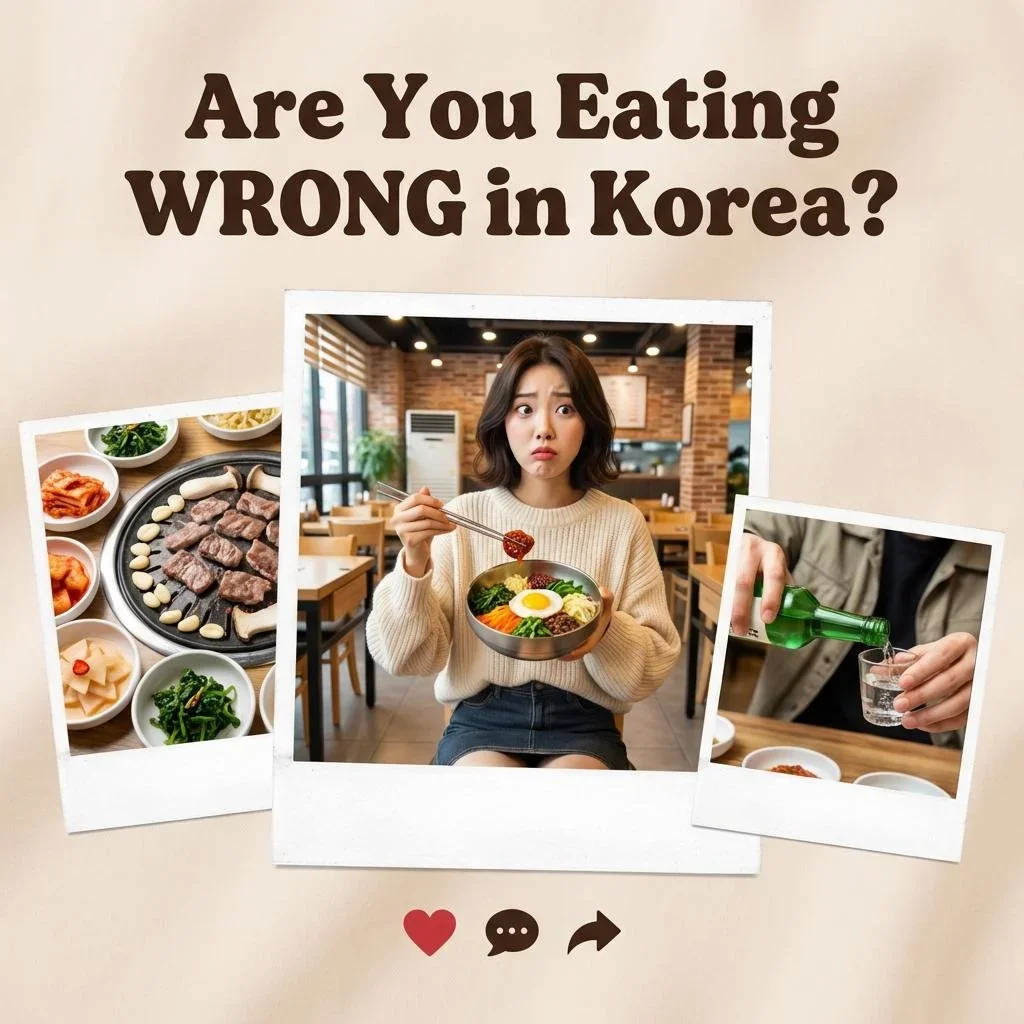
Are You Eating WRONG in Korea?
Quick Guide: TL;DR
• The Core Hack:In many Korean restaurants, utensils are in a drawer on the side of the table. The person sitting closest is expected to get them for everyone.
• Why It Matters:Foreigners often wait for staff to bring utensils, creating an awkward pause. Handling it yourself shows you understand the unspoken, self-sufficient flow of a Korean meal.
• Action Step:When you sit down, feel the side of the table for a sliding box or drawer. If you're closest, open it and pass the spoons and chopsticks to your dining partners.
Mastering Korean etiquette is about showing respect and awareness of the communal harmony. By following these simple rules, you transition from a confused tourist to a respected guest.
| Do |
Don't |
The "Why" |
| Wait for the eldest person to start. |
Start eating as soon as food arrives. |
Shows deep respect for social hierarchy. |
| Use a spoon for rice and soup. |
Use chopsticks for rice or scoop soup. |
Traditional, functional separation of utensils. |
| Pour drinks for others, not yourself. |
Fill your own glass. |
An act of care and communal connection. |
Pros and Cons: The Infamous Metal Chopsticks
| Pros |
Cons |
| Hygienic and easy to clean. |
Slippery for beginners. |
| Durable and reusable. |
Can be noisy against bowls. |
| Excellent for grilling meat. |
Difficult to pick up small items like beans. |
1. Why Korean Table Manners for Foreigners Feel So Complicated
Welcome to Korea, where food is not just sustenance; it's a language of respect, community, and care. For foreigners, the rules can feel like a minefield. Why? Because korean dining etiquette isn't just about rules; it’s a physical expression of social harmony. With gastronomy now the #1 reason tourists visit, understanding this is more crucial than ever. The recent surge in solo dining culture is creating an interesting tension with these traditional communal values, a topic even locals are debating. But for visitors, the core principles remain the same.
2. The Ultimate Guide to Korean Chopsticks Rules and Utensil Use
This is where most foreigners trip up. The core rule is using the right tool for the job. Your spoon is for rice, stews, and soups. Your chopsticks are for everything else—the side dishes (banchan). Using both at the same time is a common sight among younger Koreans, but the truly egregious errors are different. Never stick your chopsticks upright in your rice bowl; it mimics funeral rites and is considered a bad omen. Similarly, keep your bowl on the table. Lifting it to your mouth is common in neighboring countries but seen as improper in Korea. Mastering these korean chopsticks rules is a sign of true cultural understanding.
3. Decoding Korean Drinking Culture with Food: Soju & More
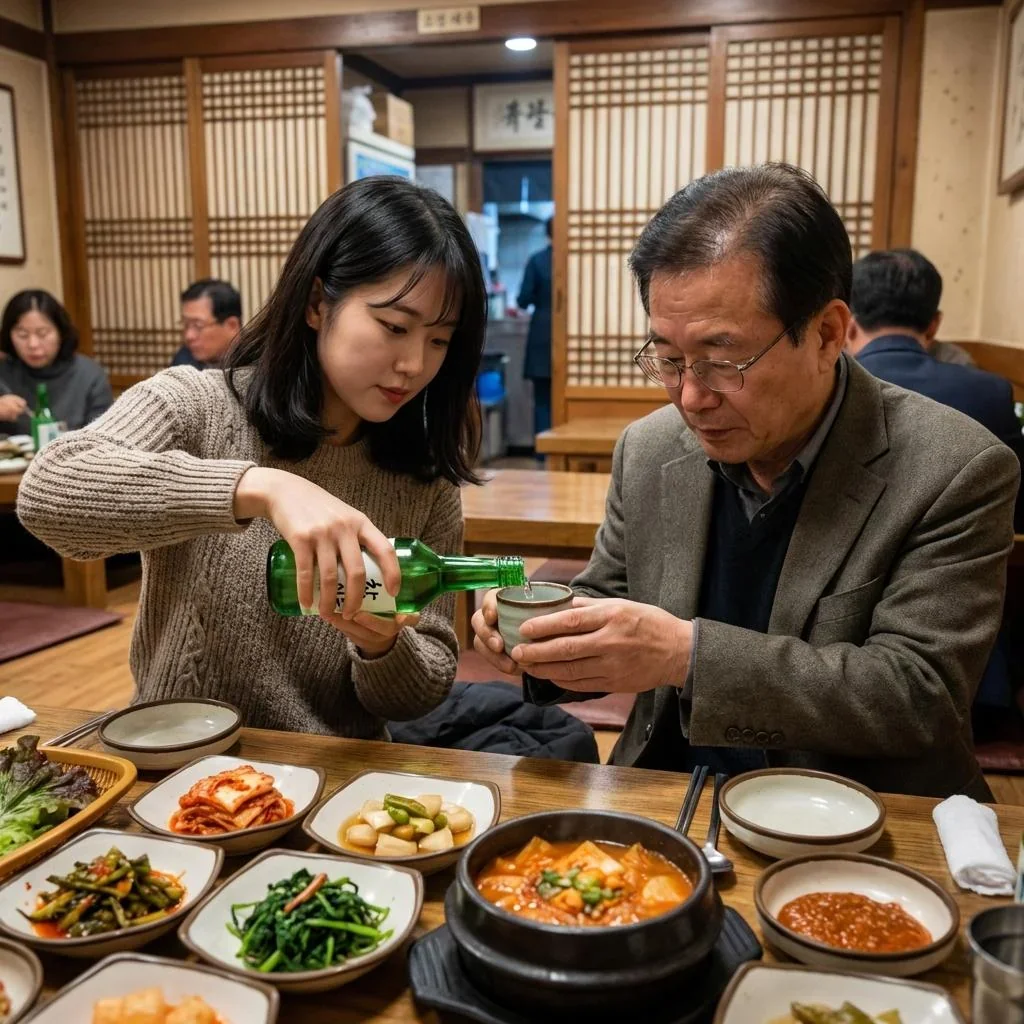
If alcohol is on the table, a new set of rules appears. Korean drinking culture with food is deeply tied to respect. When pouring for someone, especially an elder, hold the bottle (like a Chamisul soju bottle) with your right hand, supporting your right wrist or elbow with your left. When receiving a drink, hold your cup with both hands. The most important gesture? When drinking with someone older, you must turn your head slightly away from them as you sip. It's a non-negotiable sign of deference.
4. How to Order Food in Korea Without Looking Lost
The "pali-pali" (hurry-hurry) culture extends to restaurants, which can be jarring. Here’s how to order food in korea smoothly.
5. What Not to Do When Eating in Korea: Beyond the Obvious
You already know not to stick chopsticks in rice. But here are the hidden rules. The biggest offense is blowing your nose at the table. It's considered highly unhygienic. If you must, excuse yourself to the restroom. Also, avoid picking through the shared side dishes to find your favorite piece. Take the piece closest to you. These subtle points are key to understanding what not to do when eating in korea.
6. Insider's Secret: The Unspoken Rule of the Utensil Drawer
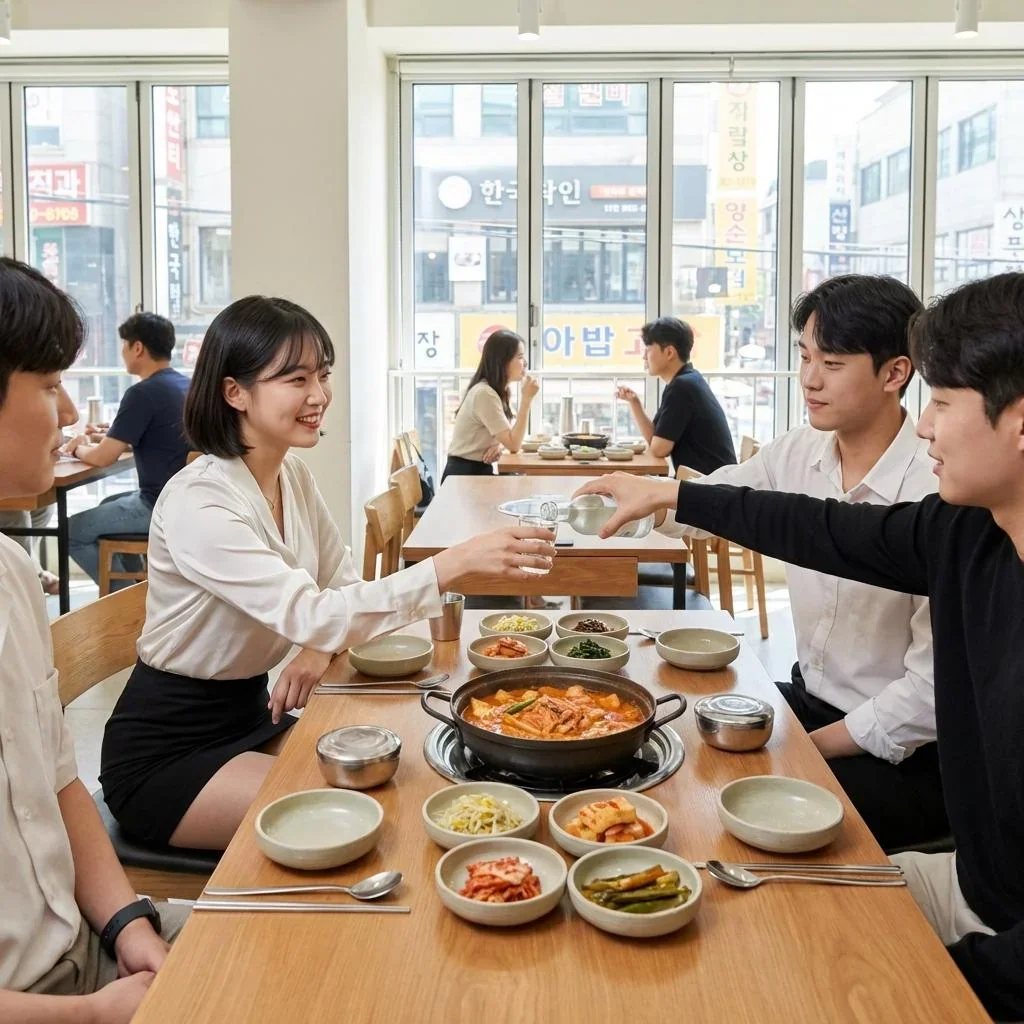
Here is a local hack that instantly separates you from the tourists. In 90% of local eateries, the spoons and chopsticks are not brought by the staff. They are in a hidden metal or plastic drawer built into the side of your table. Foreigners often wait awkwardly, assuming the staff forgot. Koreans, however, know to simply slide it open. The unspoken rule is that whoever is closest to the drawer is responsible for handing utensils to everyone. It's a tiny act of social awareness that shows you're in sync with the local rhythm.
7. Navigating the 'Tipping in South Korea Restaurants' Confusion
Let's make this simple: do not tip. The concept of tipping in south korea restaurants does not exist. Service is included in the price, and workers are paid a set wage. Leaving cash on the table will cause confusion, and a staff member may even run after you to return it. It can be interpreted as pity, which is insulting.
8. Understanding Banchan Culture: The Free Food Myth
Those delicious, endlessly refillable side dishes are called banchan. Understanding banchan culture is simple: they are a gift of hospitality, included with your main meal. Yes, they are free. And yes, you can ask for more. Simply tell the staff, "Banchan deo juseyo" (반찬 더 주세요
- "More side dishes, please"). It’s not rude to ask; it’s expected.
9. A Special Guide for Eating with Korean Elders
All the rules are amplified when eating with korean elders. This is where etiquette is least flexible. Do not pick up your chopsticks or spoon until they do. Pour their drink first. When they offer you food from a shared dish, accept it. Pace your eating to match theirs. These gestures of respect are the foundation of the meal.
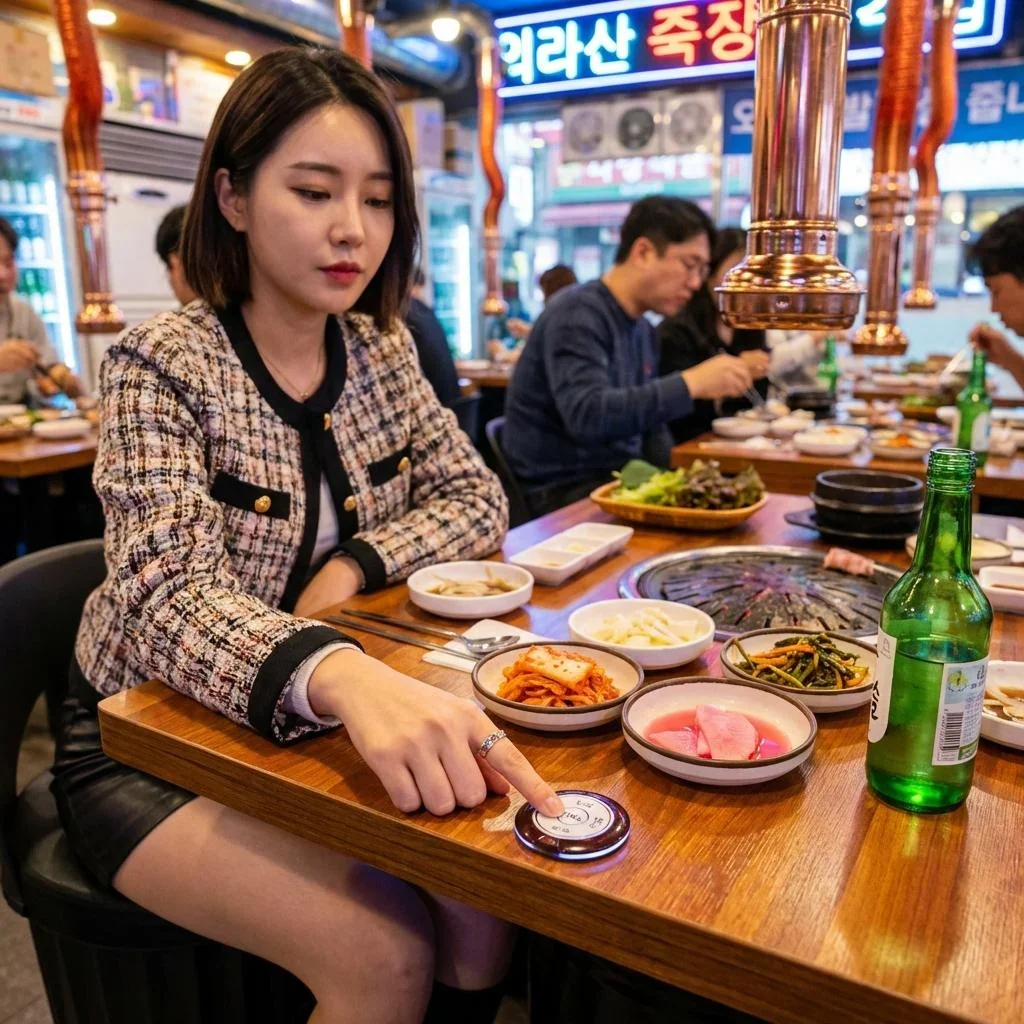
10. Pay at the Counter, Not the Table
Another common tourist mistake is waiting for the bill. In almost all Korean restaurants (except high-end hotels), you do not pay at your table. When you are finished, you take the bill slip (if there is one) from your table and go to the main counter near the exit to pay.
11. Practice Makes Perfect: A Real-World Location
To see these rules in action, visit a beloved, traditional spot like Tosokchon Samgyetang (토속촌 삼계탕) . It's famous for its ginseng chicken soup and is frequented by locals and tourists alike, making it a great place to observe and practice.
Address:
5 Jahamun-ro 5-gil, Jongno-gu, Seoul
12. Explore Korean Flavors Online
Ready to try your hand at Korean cooking? You can find authentic ingredients and utensils here:
Questions & Answers
Q1: Is it rude to refuse a drink, especially Soju, from an elder?
A: It can be tricky. Refusing outright can be seen as impolite. A better way is to accept the glass but simply not drink from it, or take a very small sip. You can also politely say you don't drink alcohol ("Jeoneun sul mot masyeoyo"
- 저는 술 못 마셔요).
Q2: What do I do if I'm vegetarian in a traditional Korean restaurant?
A: This is a major challenge as many broths and even kimchi can contain fish products. Be very clear. Use a translation app or card that says "저는 채식주의자입니다. 고기나 해산물을 못 먹습니다." (I am a vegetarian. I cannot eat meat or seafood). Look for temple food restaurants or restaurants specializing in dishes like bibimbap, where you can request to hold the meat.
Q3: Do these etiquette rules apply to casual street food stalls?
A: The rules are much more relaxed. You can eat standing up, and formal respect for elders is less of a focus. However, basic politeness like not making a mess and thanking the vendor still applies.
Whether you're exploring the bustling streets of Myeongdong or the quiet hanok alleys of Bukchon, these etiquette tips will serve you well. Korean dining is about connection. Enjoy the meal, enjoy the company, and don't be afraid to make a small mistake—your effort to learn the culture is what truly matters.