Showing posts with label living in korea. Show all posts

Korean Public Transport Etiquette Foreigners Often Miss

Start here: Korea Travel Reality Guide for Foreigners

Foreigners often say Korea’s public transport is clean and efficient, but many also feel small social pressure without understanding why.

This happens because much of the etiquette is unspoken. Locals follow it automatically, and foreigners may break it without realizing.

What foreigners expect

Many visitors expect public transport rules to be clearly announced and enforced the same way as in their home country.

They assume that if something is not strictly forbidden, it is socially acceptable.

What Koreans actually notice

In Korea, public transport etiquette is strongly shaped by “shared comfort.” People try to reduce noise, blocking, and friction in crowded space.

  • Silence is the default. Trains and buses are often quieter than foreigners expect.
  • Flow matters. Small blocking behaviors are noticed quickly in crowded stations and doors.
  • Personal space is managed indirectly. People rarely confront others, but discomfort is real.

Common misunderstandings

  • Talking loudly is normal everywhere. In Korea, loud conversations can feel disruptive, especially on trains.
  • Standing anywhere is fine. Blocking doors or escalator flow creates silent frustration.
  • Eating and drinking is always acceptable. Some items and smells draw attention in enclosed spaces.
  • Priority seating is “only for elderly.” Locals often treat it as reserved even if empty.

Why it’s like this in Korea

Korean cities are dense and commuting is a daily routine for many people. When crowds are normal, small behaviors have bigger impact.

  • High commuter volume. Efficiency depends on people moving smoothly and quickly.
  • Low confrontation culture. People prefer indirect pressure over direct conflict.
  • Shared-space mindset. Comfort is treated as a collective responsibility, not an individual right.

What to do differently

  • Lower your volume. If you speak, keep it quiet and short.
  • Do not block doors. Step off briefly if needed, then re-enter.
  • Stand to one side on escalators. Let others pass if they are rushing.
  • Respect priority seating. Treat it as reserved even if no one is there.
  • Keep bags compact. In rush hours, large backpacks create friction.

Conclusion

Korean public transport etiquette is mostly about reducing friction in crowded spaces. Once you understand the local default—quiet, flow, shared comfort—your experience becomes smoother.

You do not need perfection. You just need the local logic.

Korean Address System Explained for Foreigners in Korea

Start here: Korea Travel Reality Guide for Foreigners

Foreigners often expect an address to work like a universal “pin.” You type it in, follow the route, and arrive at the correct entrance.

In Korea, you can have the correct address and still feel lost. This post explains why the Korean address system feels complicated, what locals rely on, and how foreigners can find places with less guessing.

What foreigners expect

In many countries, one address usually points to one obvious building entrance. Street names and house numbers guide you step by step.

So when foreigners come to Korea, they often assume the same logic will apply. When it does not, they think the map is broken or the address is wrong.

If map navigation already feels confusing, start with this post first: Why Google Maps Feels Wrong in Korea for Foreigners.

What Koreans actually notice

Locals do not treat addresses as the only way to find a place. Many Koreans combine multiple signals: neighborhood name, building name, nearby landmarks, and map pins.

  • Building names are often more useful than street numbers. People commonly refer to apartments, towers, or complexes by name.
  • The “last 50 meters” is the hard part. The address can guide you to the area, but not always the best entrance.
  • Neighborhood-level logic matters. Koreans often think in terms of areas (dong) and landmarks rather than only street lines.

Common misunderstandings

  • “If I have the address, I will find it.” In Korea, an address may point to the correct building but not the correct entrance.
  • “Street names should guide me.” Street-based navigation is not always the simplest way in dense neighborhoods.
  • “The map pin must be wrong.” The pin can be correct, but the walking path may not match how locals approach the building.

Why it’s like this in Korea

Korea’s cities are dense, layered, and often built around complexes rather than single street-facing houses. This changes how location information feels in daily life.

  • High-density building layouts. One block can contain underground paths, multiple entrances, and connected buildings.
  • Complexes and towers. Apartments and office buildings are often grouped, and the “right entrance” is not always obvious from the street.
  • Two address systems. Korea uses a road-name address system, but many people still recognize older, area-based patterns in daily conversation.

This is why locals rarely rely on one single number. They use context and landmarks to reduce friction.

What to do differently

Foreigners do not need to memorize the entire address system. The goal is to use local logic to solve the final steps.

  • Use a map app that shows entrances and landmarks. The best tools for Korea usually highlight nearby exits, buildings, and entry points.
  • Search by place name when possible. If you have a business name, searching the name can be easier than searching the address.
  • Use landmarks to confirm location. Look for nearby subway exits, convenience stores, major crossings, or recognizable buildings.
  • Zoom in for the final approach. The last part is where most mistakes happen. Switch to close zoom and compare the pin with the real street layout.
  • Save the place once you find it. Locals often “save” places in map apps to avoid repeating the same confusion later.

Conclusion

The Korean address system is not impossible. It is simply optimized for dense cities and complex building layouts, where the “final approach” matters more than foreigners expect.

Once you stop treating an address as the only truth and start using local context—names, landmarks, entrances—finding places in Korea becomes much easier and far less stressful.

Gaehang-ro

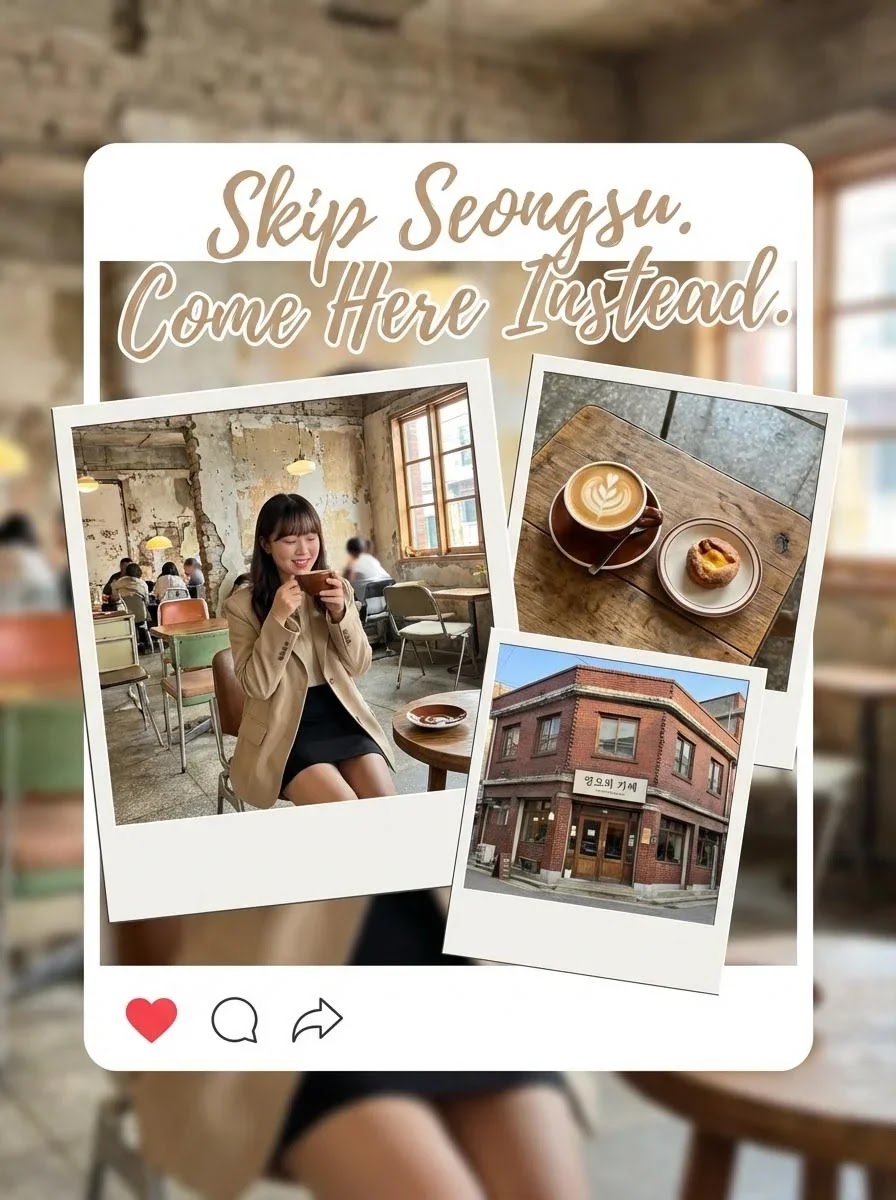
2026 Insider Guide Gaehang-ro "Skip Seongsu for this Newtro hidden gem. Discover Incheon's authentic 19...